Travel Often · Croatia
I had exactly twelve hours in Dubrovnik, and I spent the last of them playing cards on the deck of a boat at one in the morning, sunburnt, slightly scraped up, and completely certain I had not seen enough.
That is the honest headline. Twelve hours in Dubrovnik is not enough, and you should go anyway.
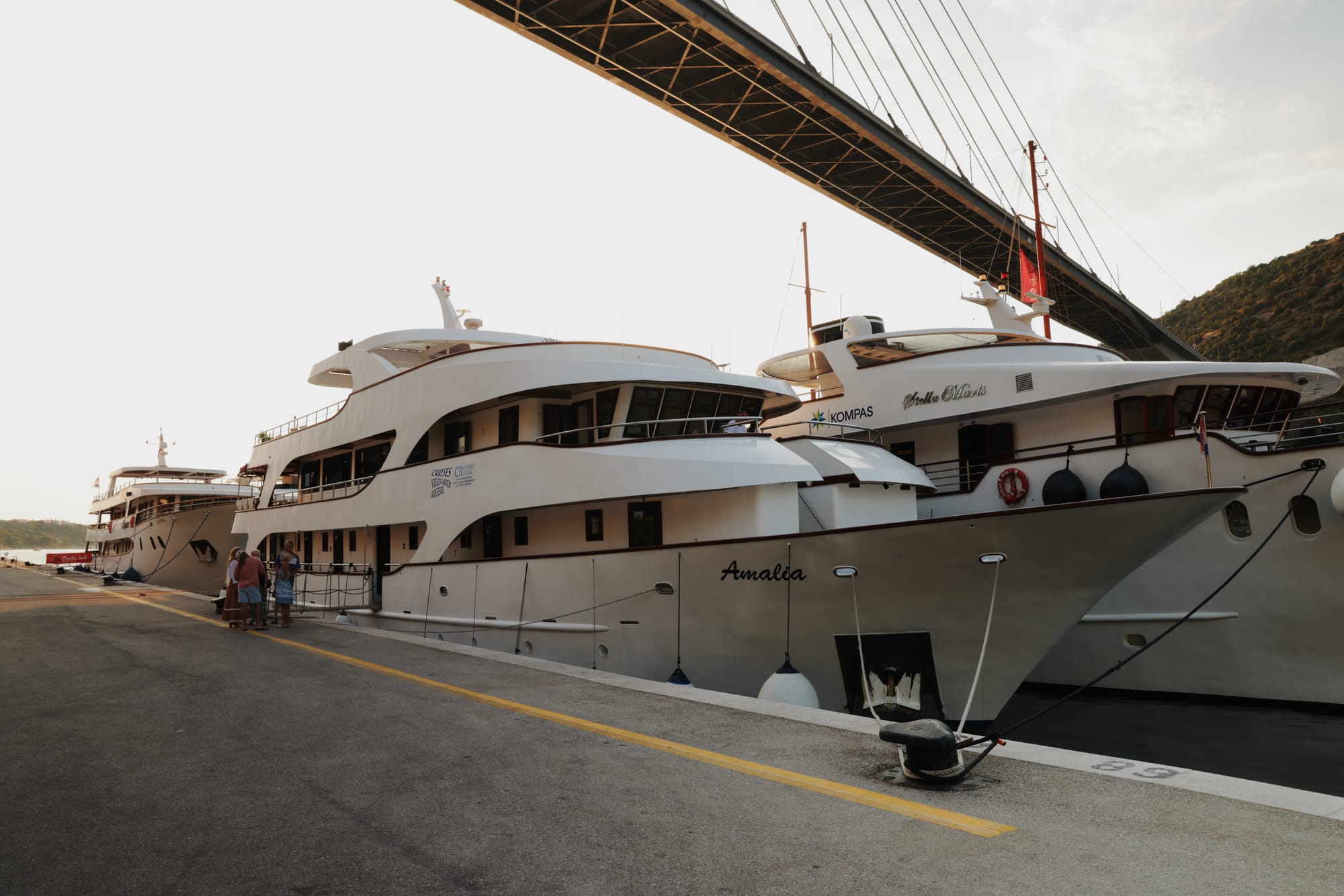
Here is how the day actually ran. We sailed in on the Amalia, a chartered yacht carrying thirty of us around the Dalmatian coast, and Dubrovnik was our fourth island stop. It was also the day before I got married — which is a detail I will come back to, because it turned an ordinary port day into the best one of the trip.
If you are arriving by cruise ship, on an island-hopping route, or flying in and out on the same day, this is a plan you can steal outright. If you are here for the Game of Thrones history, skip to that section — the numbers our guide gave us were genuinely astonishing, and I went and checked them afterward.
We made port around noon in the Marina Frapa area, near the cruise terminal and under that enormous suspension bridge you will see in every aerial shot of the city. It is the Franjo Tuđman Bridge, it spans the Gruž inlet, and it is nowhere near the Old Town.
This is the first thing nobody tells you plainly, so I will: wherever you land in Dubrovnik, you are not in Dubrovnik yet. The cruise port is about three kilometres from the walled city. The airport is a half-hour drive. Every single thing you came to see is inside those walls.
So do not wander. Do not stop for a coffee near the terminal. Do not decide to "see what's around here first." Get in a taxi, get on a bus, and go.
| From | Option | Price | Time |
|---|---|---|---|
| Gruž cruise port | Bus 1A, 1B or 3 | €1.73 from a kiosk, €2.50 from the driver | 10–15 min |
| Gruž cruise port | Taxi | ~€15 | 10 min |
| Gruž cruise port | Walk | Free | 30–45 min, hilly and fully exposed |
| Airport (DBV) | Platanus shuttle | €10 one way, €15 return | ~30 min to Ploče Gate |
The bus stop at the cruise terminal is directly outside the doors. A 24-hour bus ticket is €5.31 and pays for itself if you are going in and out more than once.
One thing to plan for now, not later: the road system back out of the Old Town seizes up in the late afternoon, at exactly the moment every cruise passenger in the city is trying to do the same thing. Give yourself sixty to ninety minutes before your all-aboard time. That is not padding. That is the actual requirement.
This was the single thing at the top of my Dubrovnik list, and it is the reason I would tell you to come here even if you had six hours instead of twelve.
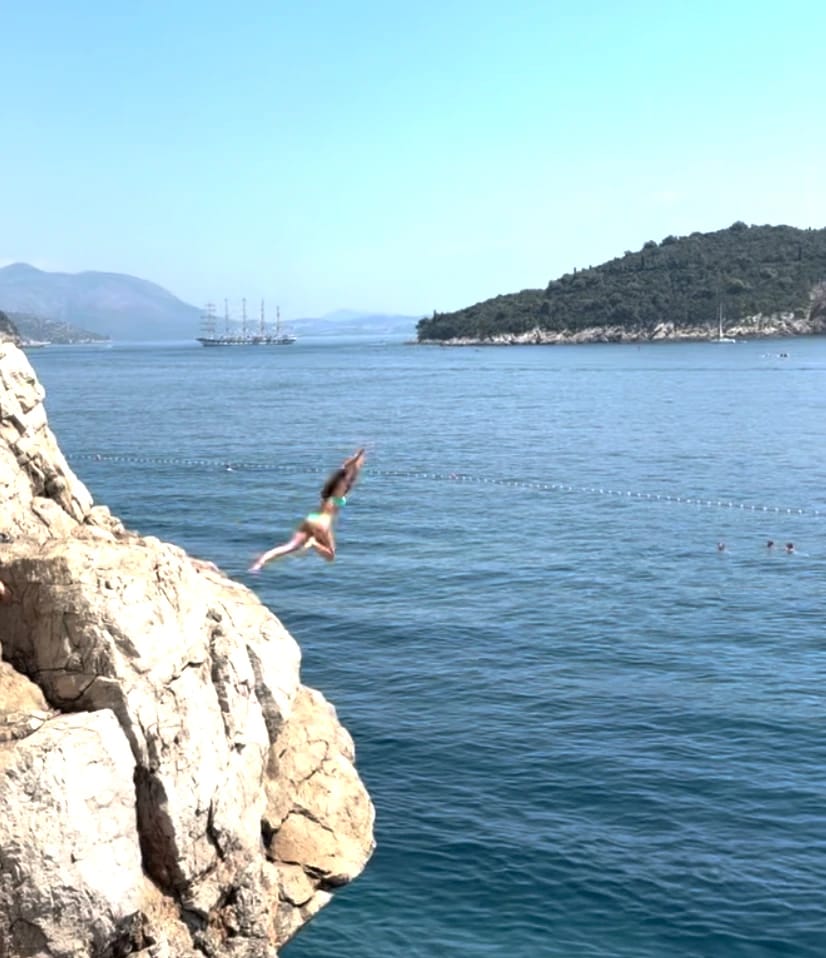
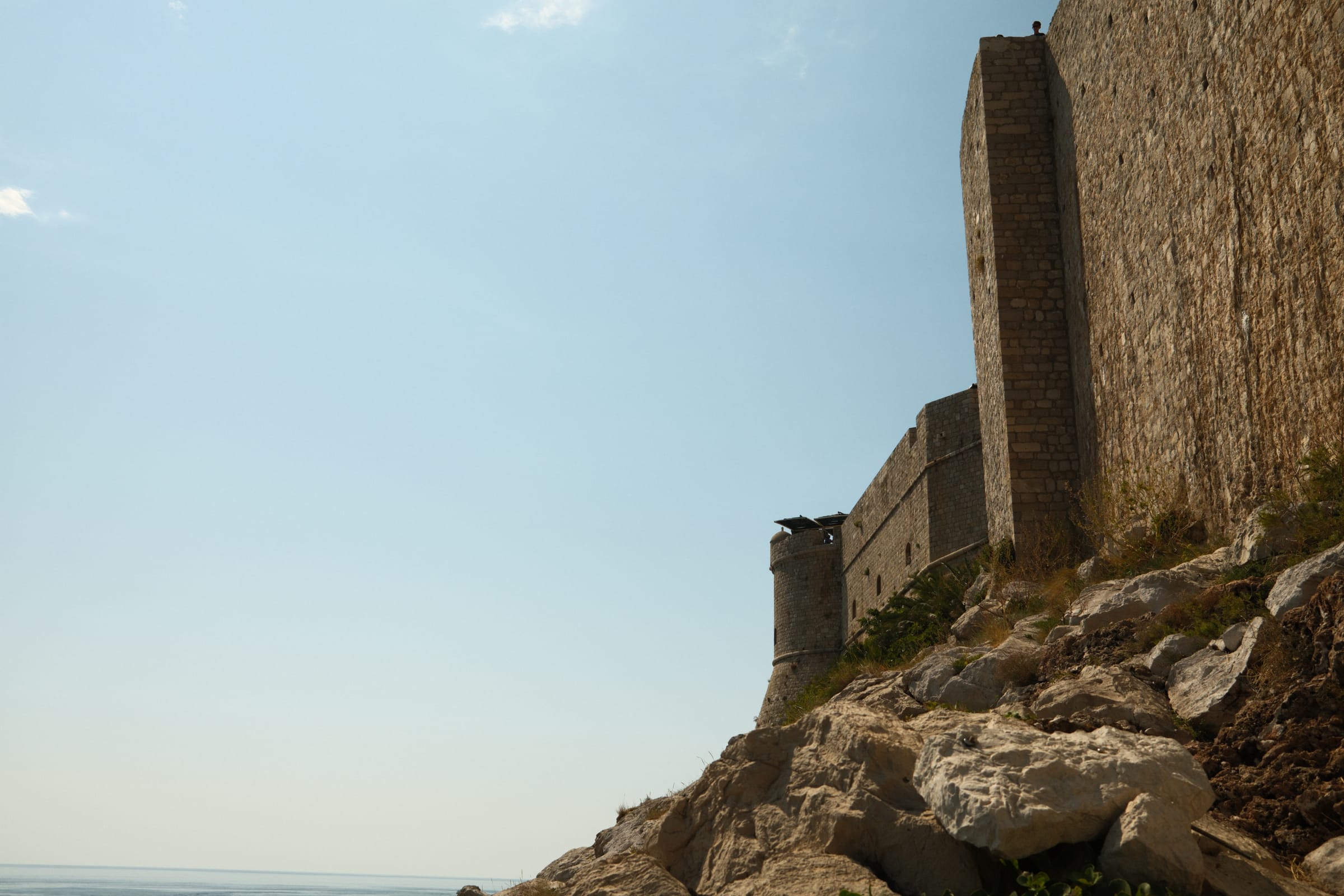
Buža Bar is built into the rocks on the outside of the city walls, on the southern face, looking at the island of Lokrum. You find it by walking the alleys of the Old Town until you spot a hole in the wall — buža literally means hole — and stepping through it. On the other side there is a bar clinging to a cliff, a scattering of plastic chairs, and a drop into the Adriatic.
About half our group went hunting for it. I went with one plan: jump off the cliff, swim in, and be holding an Aperol spritz within minutes.
I did exactly that. It was the best thing I did in Croatia.

This place is the wild west. And by "this place" I mean Croatia generally, but this bar in particular.
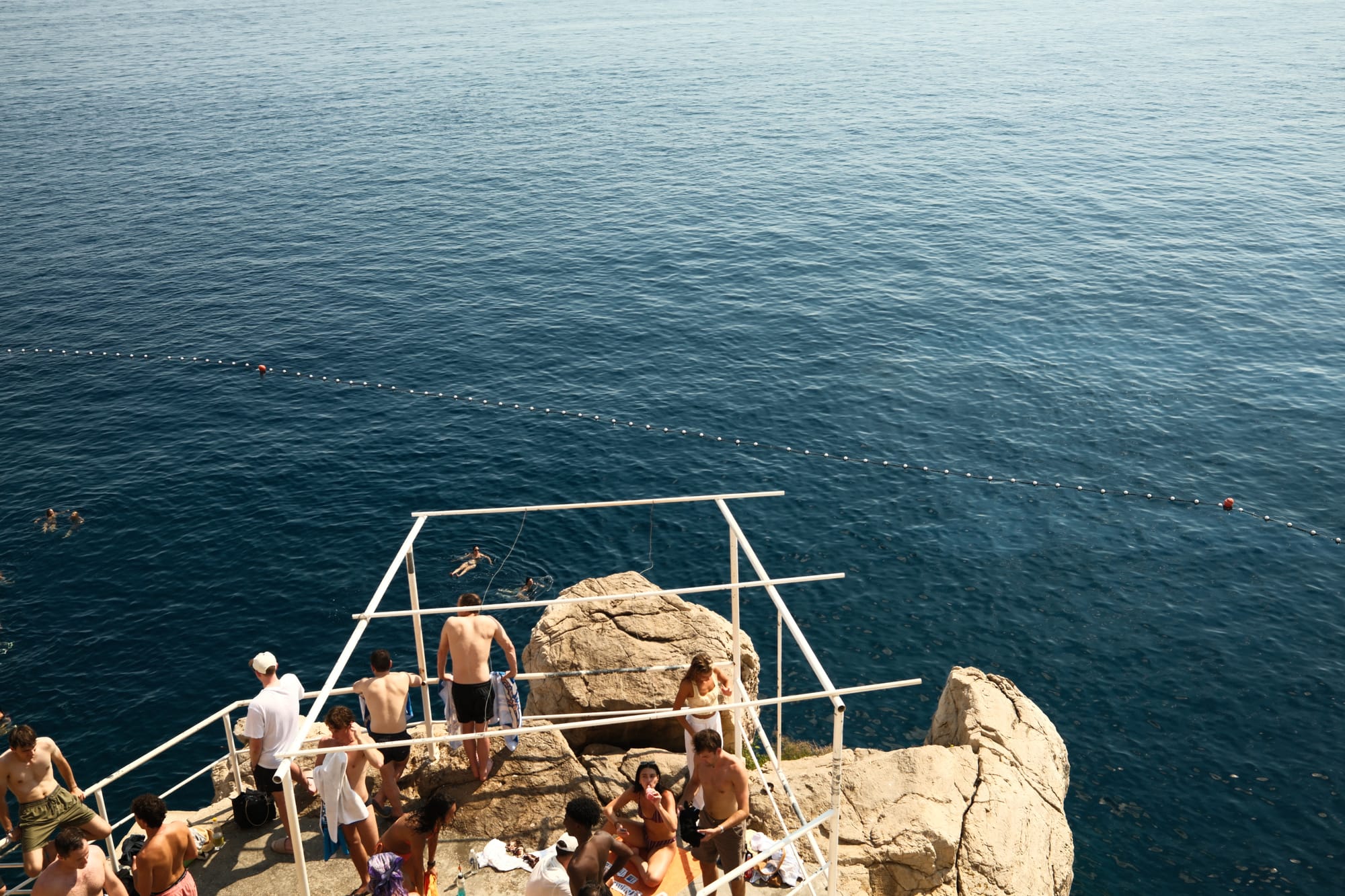
The climb up to the jumping point is genuinely dicey. Not scenic-adventure dicey. Actually hard. The girl directly in front of me spent about ten minutes trying to get up the first section and then gave up and climbed back down. I was nervous the whole way. I made it, but I understand completely why she didn't.
Getting out of the water is just as sketchy as getting up. You are hauling yourself onto wet rock with no ladder and no handhold that anyone designed. I came out unscathed. At least two people in our group came out with bloody legs.
And there is a large sign. It says, in effect, danger, do not jump, do not swim, proceed at your own risk. We read it. We jumped anyway. Whoops.
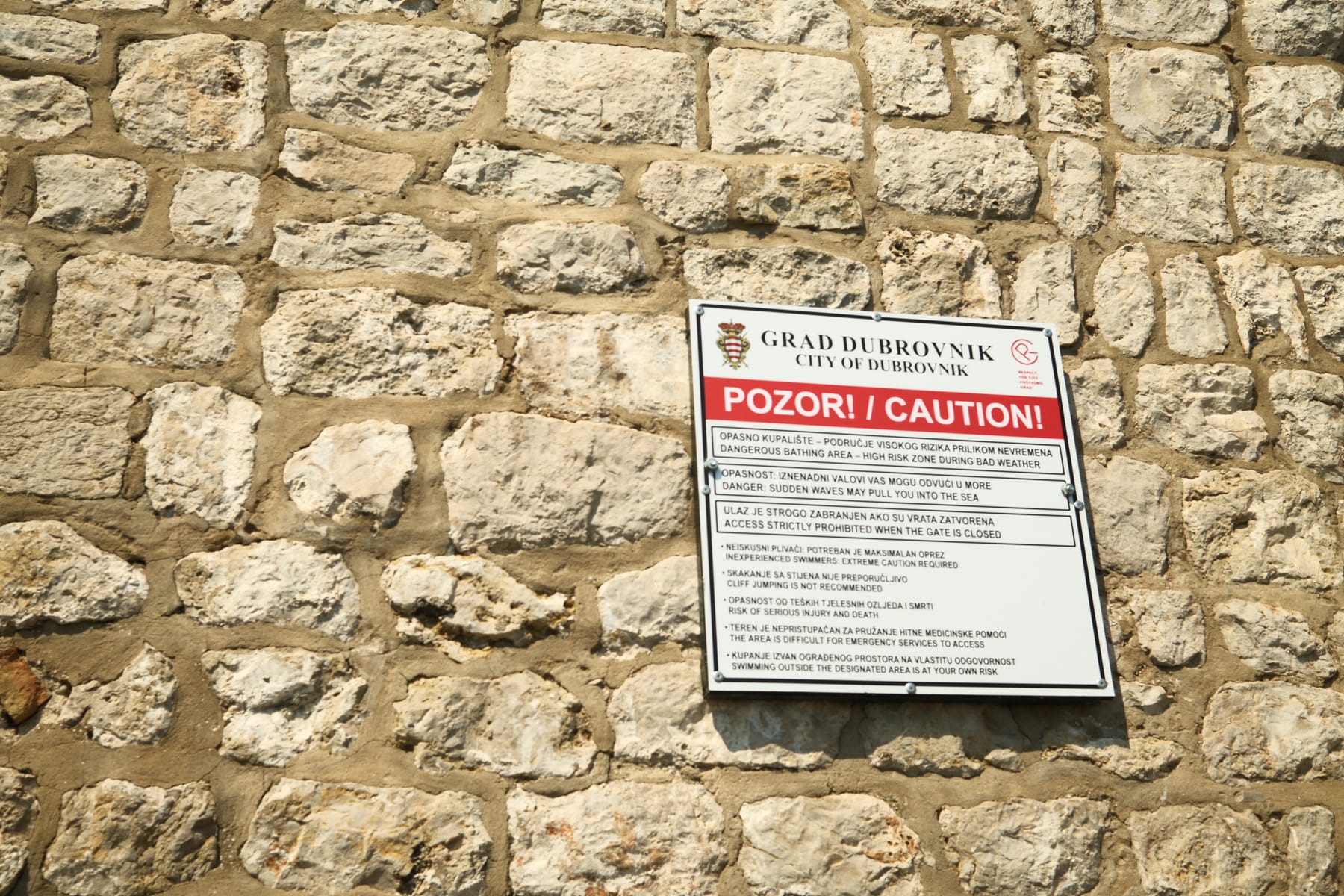
So here is my actual advice, and I want to be very clear about it: there are no railings, no ladders, no lifeguards and no safety precautions of any kind here. The sign is not decoration and it is not a liability formality. It is a description of the conditions. If you go in, you are making that call for yourself, and you should make it soberly, in daylight, with a good look at the water first.
I made that call and I would make it again. I am also not going to pretend it was safe.
We wound back up through the alleys and stairs into the main square, and I got a mango gelato that I have thought about approximately once a week ever since.
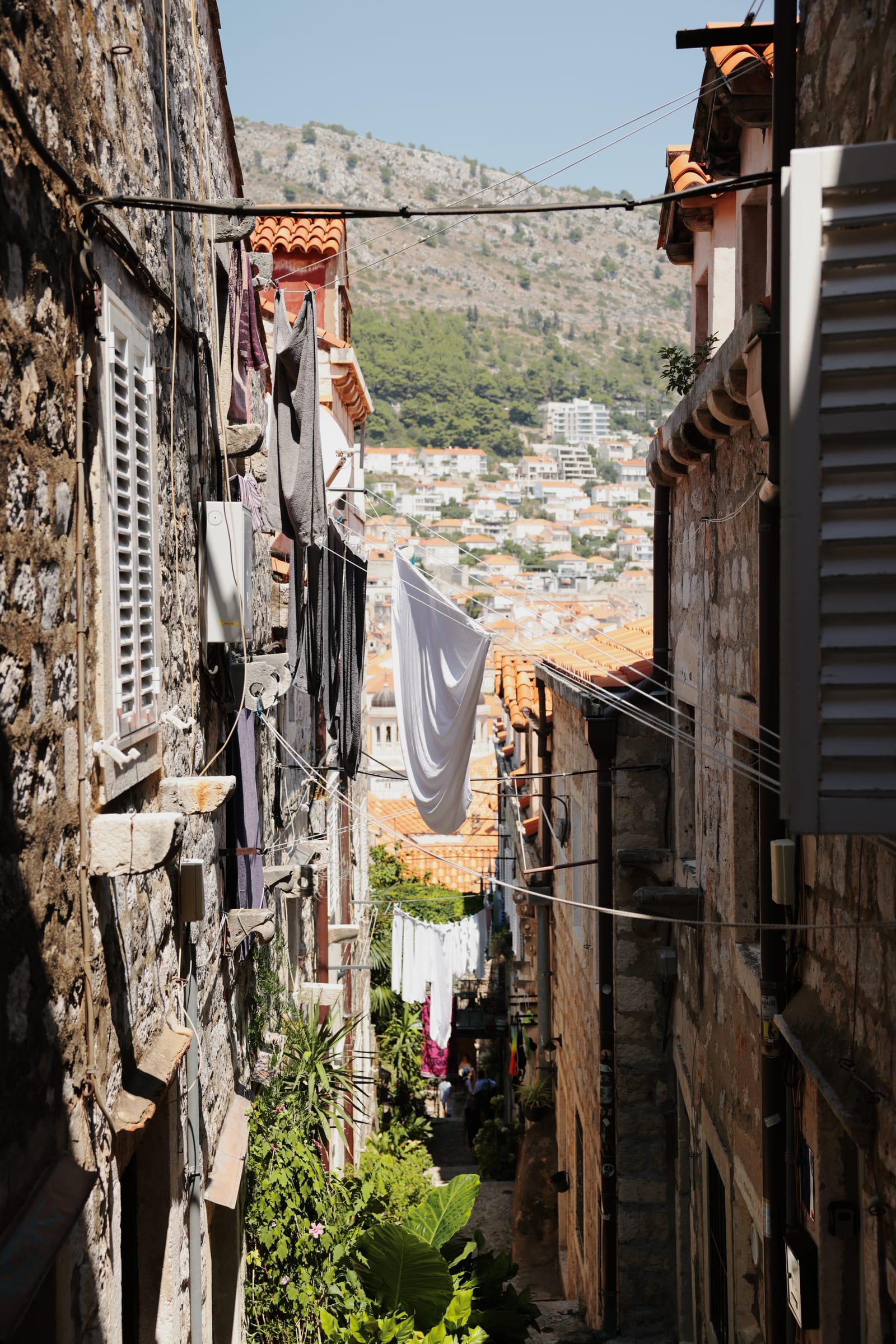
I am aware that "best gelato ever" is a thing people say. I am saying it on purpose. Get the mango.
At two o'clock we started a two-hour Game of Thrones walking tour, and it turned out to be the most interesting thing I did in Dubrovnik that wasn't jumping off a cliff.
I want to be honest about why I am recommending it, because I nearly skipped it. It was 2pm in early August, which in Dubrovnik means brutal, direct, no-shade heat. Our guide was funny enough that she made trudging around a medieval city in that heat genuinely fun, and she knew the history — the real history, not just the show — well enough that the tour stopped being about television about fifteen minutes in.
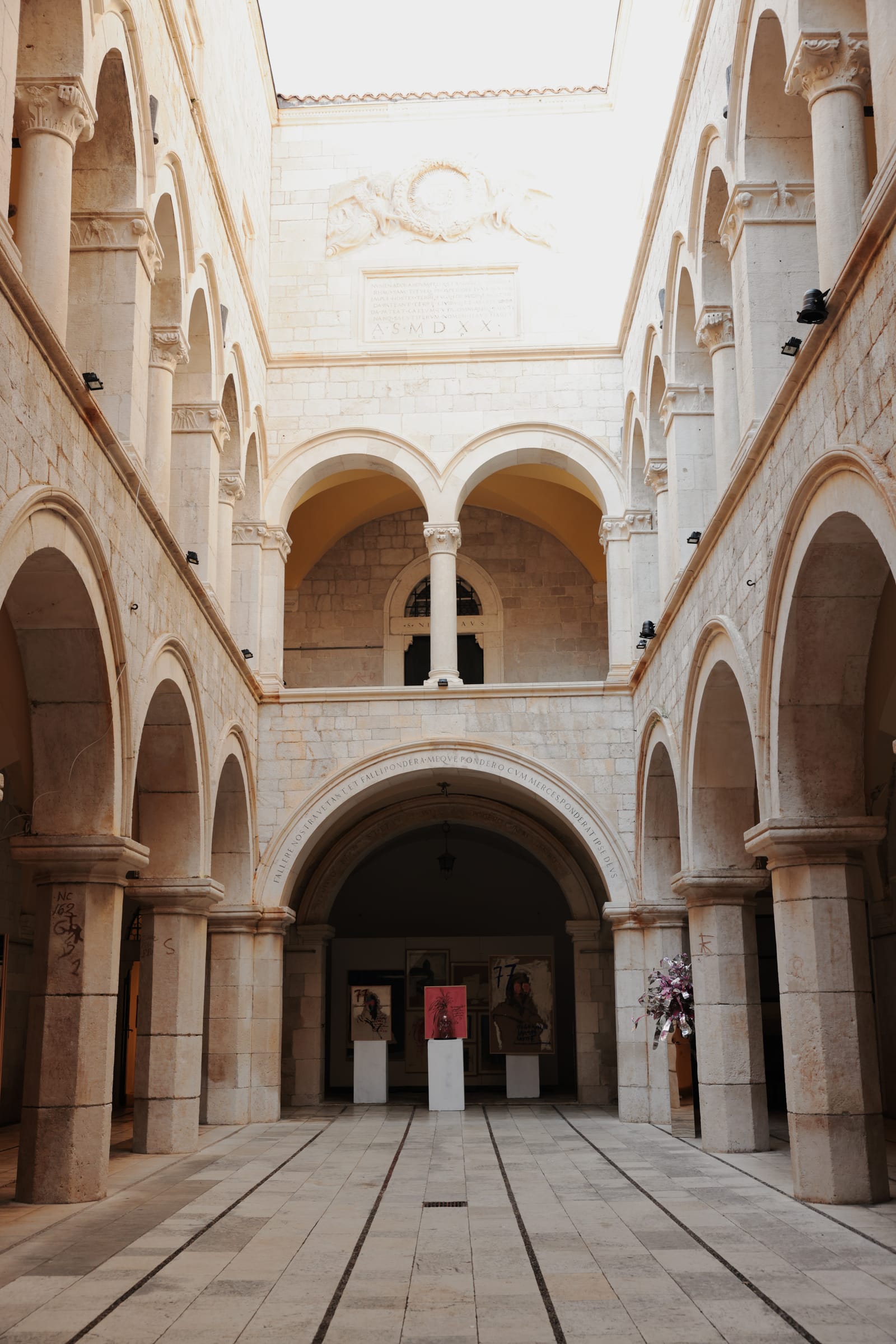
Game of Thrones filmed in Dubrovnik from Season 2 onward, using the city as King's Landing. Fort Lovrijenac played the Red Keep. Lokrum island, the one you are staring at from Buža, played Qarth. Trsteno Arboretum up the coast played the Red Keep gardens. And the Jesuit Staircase is where Cersei's walk of atonement was filmed — the one scene everybody remembers, shot on a staircase you can walk up for free, right now, today.
And then our guide started giving us numbers.
I wrote these down and checked them when I got home, because they sounded too good. Most of them hold up. Here is what I can actually stand behind:
A peer-reviewed economic study by researchers at the Zagreb Institute of Economics, published in the International Journal of Tourism Research, put a figure on it: 244,415 tourists came to Dubrovnik because of Game of Thrones between 2012 and 2015 alone, spending an estimated €126 million. That is roughly 60,000 extra people a year, attributable to a television show, in a city whose entire Old Town population is now about fifteen hundred people.
Dubrovnik's tourism today: the city recorded about 1.44 million arrivals and 4.4 million overnight stays in 2019, its pre-pandemic peak. In 2024 it hit 1.4 million arrivals and 4.56 million overnight stays — meaning overnight stays have now passed the 2019 record, even though arrival numbers are still a hair below it. People are staying slightly longer than they used to.
The ratio that explains everything: in 2019 Dubrovnik had roughly 36 tourists for every resident — the highest ratio of any city in Europe.
On wages, which was the statistic I found most interesting and which I want to be careful about. Average net monthly pay in Dubrovnik-Neretva County ran about €762 a month in 2016. By the end of 2025 it was €1,393 — an increase of roughly 83% in nominal terms. I could not find a publicly available county figure from before the show started filming in 2011, so I am not going to invent a "before Game of Thrones" number. What I can tell you is that the county now sits near the very top of Croatia's regional wage table, and that is not where a small coastal county historically sat. (These figures come from the Croatian Bureau of Statistics; the 2016 figure was published in kuna and I have converted it at the fixed rate. Neither figure is adjusted for inflation.)
And the cost of all this: UNESCO's monitoring mission in 2015 recommended that no more than 8,000 people be inside the Old Town at once. The city responded with its own "Respect the City" policy — from 2019, a maximum of two cruise ships a day, capped at 5,000 cruise passengers. Meanwhile the Old Town's resident population has fallen from somewhere between 3,500 and 5,000 in the early 1990s — sources genuinely disagree — to around 1,500 today.
That last number changes how the city feels once you know it. The Old Town is less a neighbourhood than a stage set that people commute into. It also makes Dubrovnik's rules about noise, swimwear and behaviour read as reasonable rather than fussy.
Here is the part I have not stopped telling people about.
Our guide pointed out that Dubrovnik is one of the most-filmed cities in Europe and that most of the time it is not playing itself. You have almost certainly seen it without knowing.
| What you watched | Where Dubrovnik pretended to be |
|---|---|
| The Unbearable Weight of Massive Talent (2022) — Nicolas Cage and Pedro Pascal | Mallorca, Spain. Pascal's billionaire compound is Villa Sheherezade, in Dubrovnik. |
| Game of Thrones (2011–2019) | King's Landing — plus Lokrum as Qarth and Trsteno as the Red Keep gardens. |
| Star Wars: The Last Jedi (2017) | Canto Bight, the casino city on the planet Cantonica. Stradun, Banje Beach and the Rector's Palace. |
| Robin Hood (2018) | Nottingham, England. |
| Knightfall (History Channel) | The Holy Land — Fort Lovrijenac and the West Harbour as the Siege of Acre. |
| Oslo (HBO, 2021) | Jerusalem. Stradun, for a single day of shooting. |
| Borgia (Canal+) | Renaissance Rome. |
| The Day of the Jackal (2024) | A fictional private island, reportedly shot at Lokrum. |
The Pedro Pascal film is the one that gets people. It is set in Mallorca, characters talk about Spain, and the villa, the coastline and the old streets are all Croatian.
Why it keeps happening: Croatia offers a 25% cash rebate on qualifying production spend, with an extra 5% for filming in less-developed regions. Administered by the Croatian Audiovisual Centre. That is the unglamorous answer to why your favourite fantasy kingdom has Dalmatian limestone underfoot.
The exceptions worth knowing: when Dubrovnik appears in Succession, it is playing Croatia — the Roy family's actual holiday. And in the final season of Netflix's Outer Banks, filmed here in 2025 and set partly in Croatia by name, the characters ride motorbikes through the Old Town alleys. A friend sent me a paused screenshot from it because she was fairly sure she could see Buža Bar in the frame. I have not been able to confirm the bar specifically — but the motorcycle chase through those alleys is real, it was filmed there, and I had been standing in them a few months earlier.
We rushed back to the boat to change, because this was not an ordinary dinner.
It was the night before our wedding. Thirty people had flown across the world for us, we had spent a week hosting all of them, and this was the last dinner my husband and I would eat as an unmarried couple. So we went all in. I wore one of my old pageant gowns. He wore his tux. We went to Prora, the beach restaurant at the Hotel Excelsior, and had dinner by the sea with live jazz playing softly behind us.
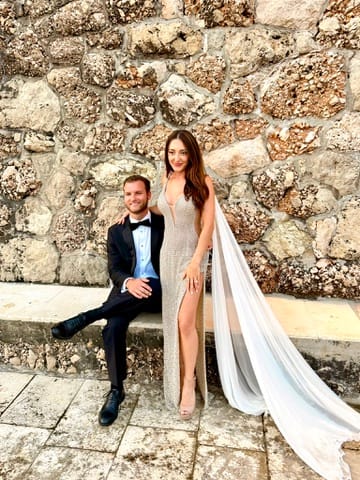
It was perfect in a way I did not expect and cannot really improve on by describing it further. The food was excellent, the drinks were excellent, and the whole thing had the strange floating quality of a night you know you are going to remember.
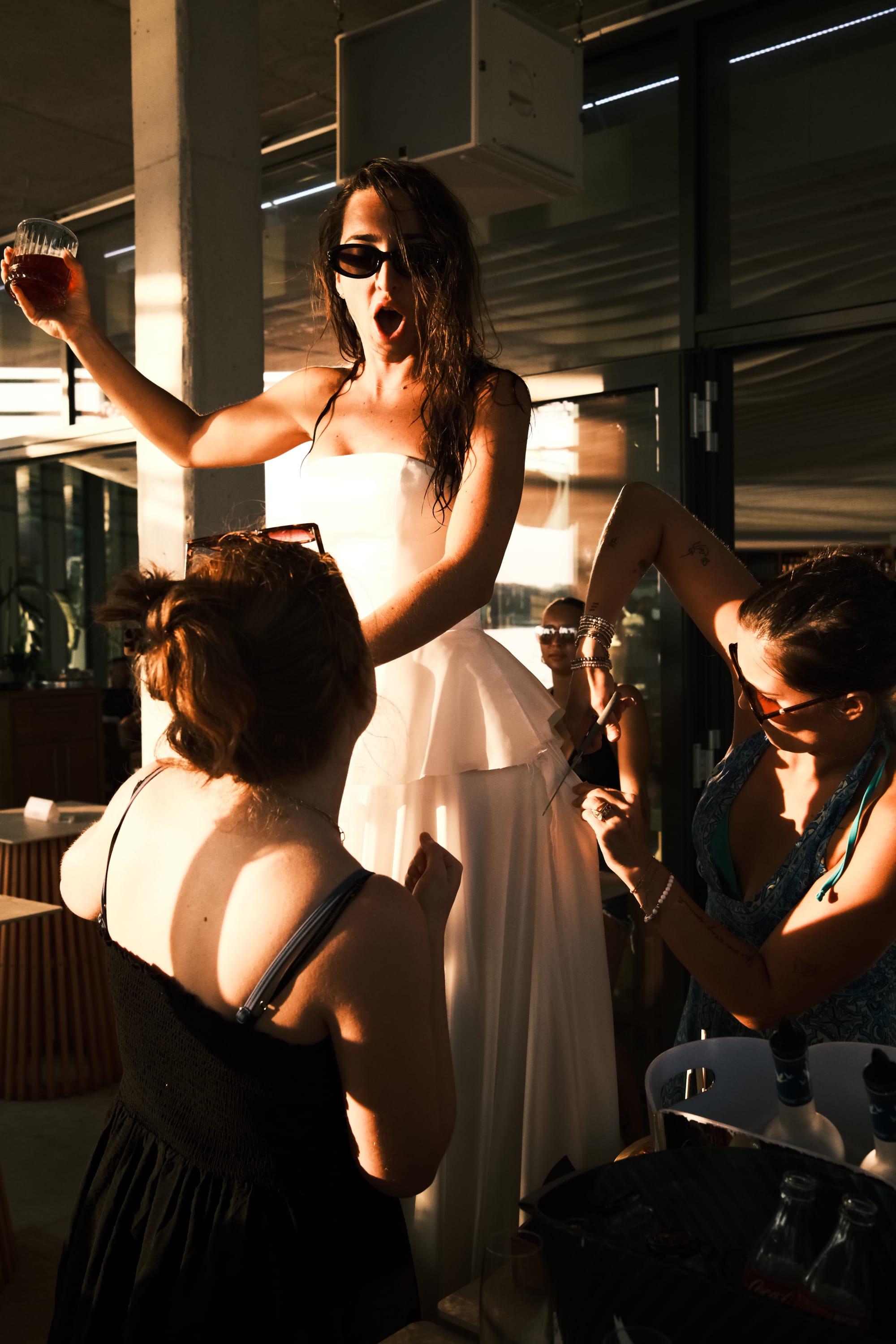
What to order: black risotto, Ston oysters, and rožata — a rose-scented custard that belongs to Dubrovnik specifically and that you will not find at home. What to drink: Pošip from Korčula if you want white, Plavac Mali or Dingač from Pelješac if you want red.
After dinner we met back up with the whole group at Cave Bar More, which is exactly what it sounds like: a bar in a genuine limestone cave, in Lapad, with a glass floor section and stalactites over your head.
It is a bit of a gimmick and it is also completely worth it. Thirty people who had spent a week together on a boat, drinking cocktails inside a cave, the night before a wedding.
We walked the boardwalk for a long time afterward. Then we went back to the Amalia and played cards for several more hours.
That is genuinely how the day ended, and I would not change it. Dubrovnik after eight o'clock is the most underrated version of Dubrovnik. The day-trippers are gone, the cruise ships have sailed, the temperature finally drops, and the city belongs to whoever stayed. If you have any control over your schedule at all, engineer your twelve hours so that some of them happen after dark.
Here is the honest planning advice, including the parts where I made trade-offs.
| Window | What it's like |
|---|---|
| Before 08:00 | Empty. The single best hour of the day. |
| 08:00–09:30 | Very good. The walls open at 08:00 — you get roughly one clear hour. |
| 09:30 | First cruise excursions land. This is the turn. |
| 10:00–16:00 | Worst. Wall queues 45–60 minutes, Stradun shoulder to shoulder. |
| After 18:00 | Day-trippers gone. Deeply underrated. |
| After 20:00 | Excellent again. |
The tool almost nobody mentions: dubrovnik-visitors.hr is the city's official crowd forecast. Cameras at the gates, updated every fifteen minutes, with a forward prediction. Check it before you commit to a plan.
In twelve hours you cannot do the City Walls, the cable car and Lokrum island properly. You can do two. Choose deliberately:
We did none of the three. We did Buža and the Game of Thrones tour instead, and I do not regret it — but that is the trade, and I would rather tell you than pretend I saw everything.
The Dubrovnik Pass is €40 for one day, which is the exact same price as a standalone City Walls ticket. The pass includes the walls plus Fort Lovrijenac, ten to thirteen museums, and unlimited city buses. If you are walking the walls at all, buying the plain walls ticket is a strict loss.
The trap: it activates the first time you scan it, including on a bus, and then runs for 24 continuous hours with no way to pause it. Do not scan it at the airport bus and then start your sightseeing four hours later.
Not included: the cable car, the Lokrum ferry, and the Dominican Monastery.
The €265 wheeled-luggage fine does not exist. The €265 penalty is real, but it applies to swimwear in public, littering, spitting, unleashed dogs and climbing on the walls. Suitcases fall under a noise regulation where officers advise rather than fine, and the city has said publicly it has no intention of fining anyone for luggage. This myth is still being published in guides this year.
Enforcement is advisory. The realistic worst case is a word from a municipal officer or being turned away from a church for bare shoulders. Not a fine.
Go in September, not early August. This is my one real regret about the timing. Early August in Dubrovnik is savage — the heat comes off the limestone in both directions and there is no shade anywhere on the walls, on Stradun, or on a walking tour. September has the same sea temperature, thinner crowds and a climate you can actually walk around in.
We went in August because we were getting married in August. If you have the choice, take September.
Stay overnight if you possibly can. The best hours in this city are before eight in the morning and after eight at night, and a day trip hands you neither.
Twelve hours in Dubrovnik, as I would run it again:
We sailed on the Amalia the next morning and I got married that afternoon, and I still think about the mango gelato.
Twelve hours in Dubrovnik leaves you wanting more. I think that might be the point.
It's in the works — we're building the community first. Join now and you'll be in the room early: the real lessons behind the trips, where I'm going next, and the bits I'd only put in an email. One a week when it launches.