Work Hard · Group Travel
Nobody falls out over the trip. They fall out over the transfer request that arrives four months later with no note attached.
I have planned a lot of group travel — most recently a wedding week in Croatia for thirty people across four islands — and I can tell you that the itinerary is the easy half. Flights get booked. Villas get found. What actually goes wrong is money: who paid for what, who still owes, and the slow resentment that builds when one person has been floating five thousand euros on a personal credit card since March.
I am a lawyer. I spend my working life writing down what people have agreed to, precisely because memory is unreliable and goodwill is not a payment method. It took me one group trip to realise I should be doing the same thing for my friends. Not because I do not trust them — because trusting people is exactly why you write it down.
Effortless is a production. Anyone who tells you otherwise is hiding the spreadsheet.
This is the single change that fixes most of it, and almost nobody does it. The usual order is: pick somewhere beautiful, get everyone excited, book something, and then discover three weeks later that two people in the group were quietly hoping this would come in at half the price.
Reverse it. Before you send a single link, ask everyone privately for one number: the most they want to spend on this trip, all in, excluding flights. Privately matters. In a group chat, people anchor to whoever answers first and to whoever they think is watching, and you will get a number that is about social positioning rather than their actual bank account.
Then plan to the second-lowest number in the group. Not the average, and not the lowest. The average quietly prices out the bottom third. The lowest usually belongs to someone who is not really coming. The second-lowest is the honest constraint, and building to it means nobody spends the trip doing arithmetic instead of enjoying themselves.
There is no universally correct method. There is a correct method for a particular group, and the mistake is drifting between them without ever saying which one you are using.
Say the method out loud, in writing, before money moves. Nine times out of ten the argument is not about the amount. It is about someone believing a different rule was in play.
I learned this one the hard way. If you are the host — the person choosing the restaurant, moving the group, absorbing the complaints about the wind — you should not also be the person chasing eleven people for four hundred euros each.
Those two roles conflict. The host needs social capital to make a hundred small decisions quickly. The treasurer spends social capital every single time they send a reminder. Put them in the same person and by day four the host has no goodwill left and everyone is annoyed about a spreadsheet.
Ask someone organised who is not hosting to be the treasurer. It is a real job and worth naming as one. And whoever takes it should never float the group's money on a personal card — collect before you commit, always.
This is the lawyer part, and it takes about fifteen minutes. One document, sent to everyone before deposits, covering six things:
Nobody will love receiving this. Everybody will be grateful for it in month four. And the cancellation clause in particular has saved me more friendships than any other single line — because the moment someone drops out is the moment a group discovers it never agreed what that meant.
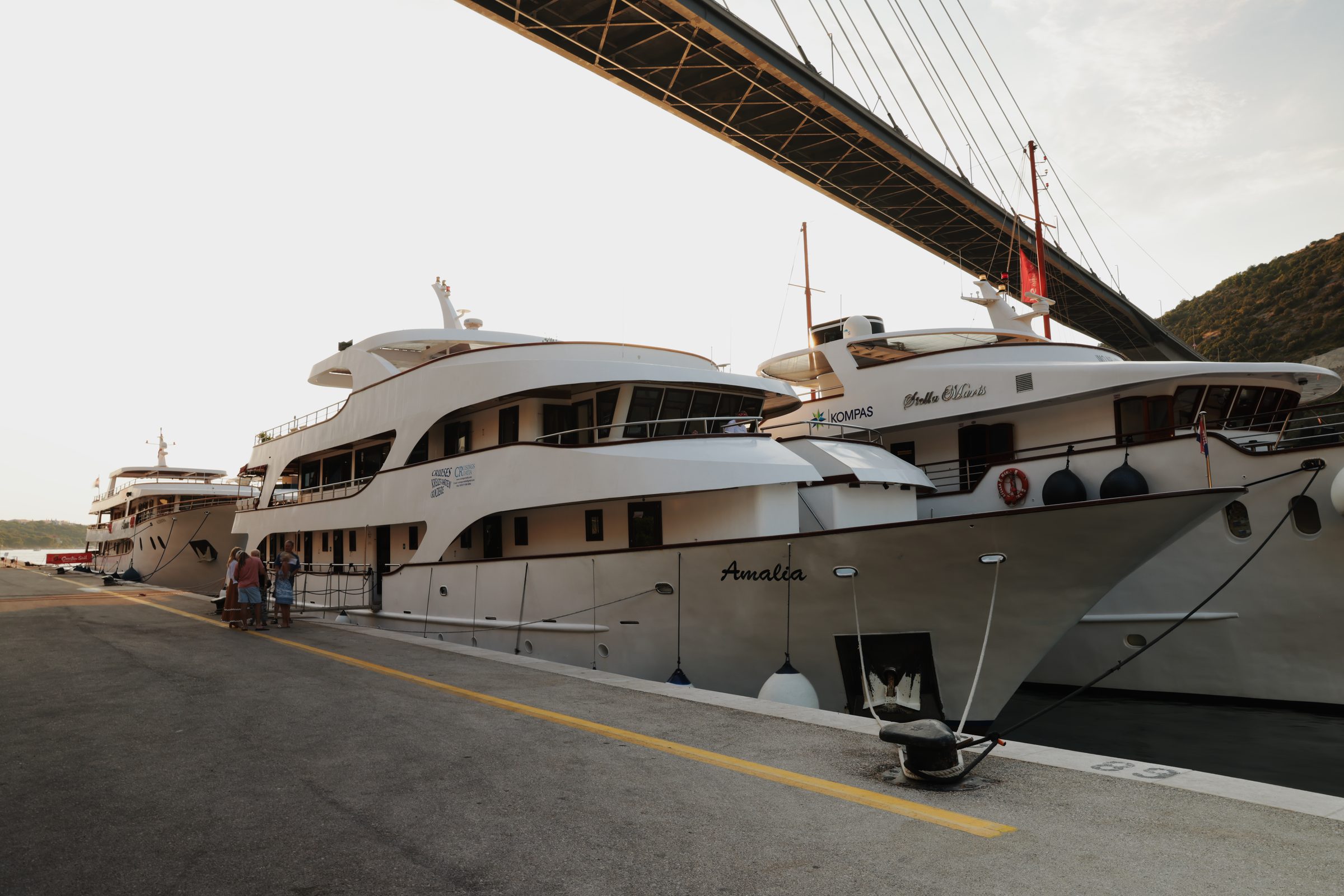
Croatia is a good stress test for all of this, because the costs are lumpy in a way most European trips are not. A charter is one enormous payment made months in advance and split many ways. Ferries and transfers between Split, Hvar, Korčula and Dubrovnik are small, constant, and paid by whoever happens to be standing nearest the window. Restaurants will happily run one bill for thirty.
The contingency line is the one I would tell every amateur planner to steal. Weather in the Adriatic in August is mostly glorious and occasionally decisive. Three days in, the wind came up and I moved an entire party. That cost money nobody had planned for, and the only reason it was not a problem is that the money already existed.
Two people in your group are on very different incomes and both of them know it. Pretending otherwise is not kindness. The kind thing is to build a trip with an honest floor and let people opt into the expensive parts, rather than constructing something where the only way to participate fully is to overspend silently.
In practice that means separating the core from the extras. The core is what everyone pays: the accommodation, the shared transport, the meals you eat together. The extras are opt-in and individually paid — the boat day, the tasting menu, the spa afternoon. Publish both lists at the start. People are far more comfortable saying no to a clearly labelled optional thing than to a vague expectation.
None of this is about mistrust. It is about removing the small ambiguities that turn into resentment somewhere over the Atlantic on the way home. Do the boring fifteen minutes at the start and you get to spend the actual trip being a person on holiday with people you love, rather than an unpaid accounts department in a swimsuit.
One email a week: where I have been, what it cost, and what I would book again. For women who plan the trip for everyone else.